
The Comfort Crisis
At the risk of pedantry

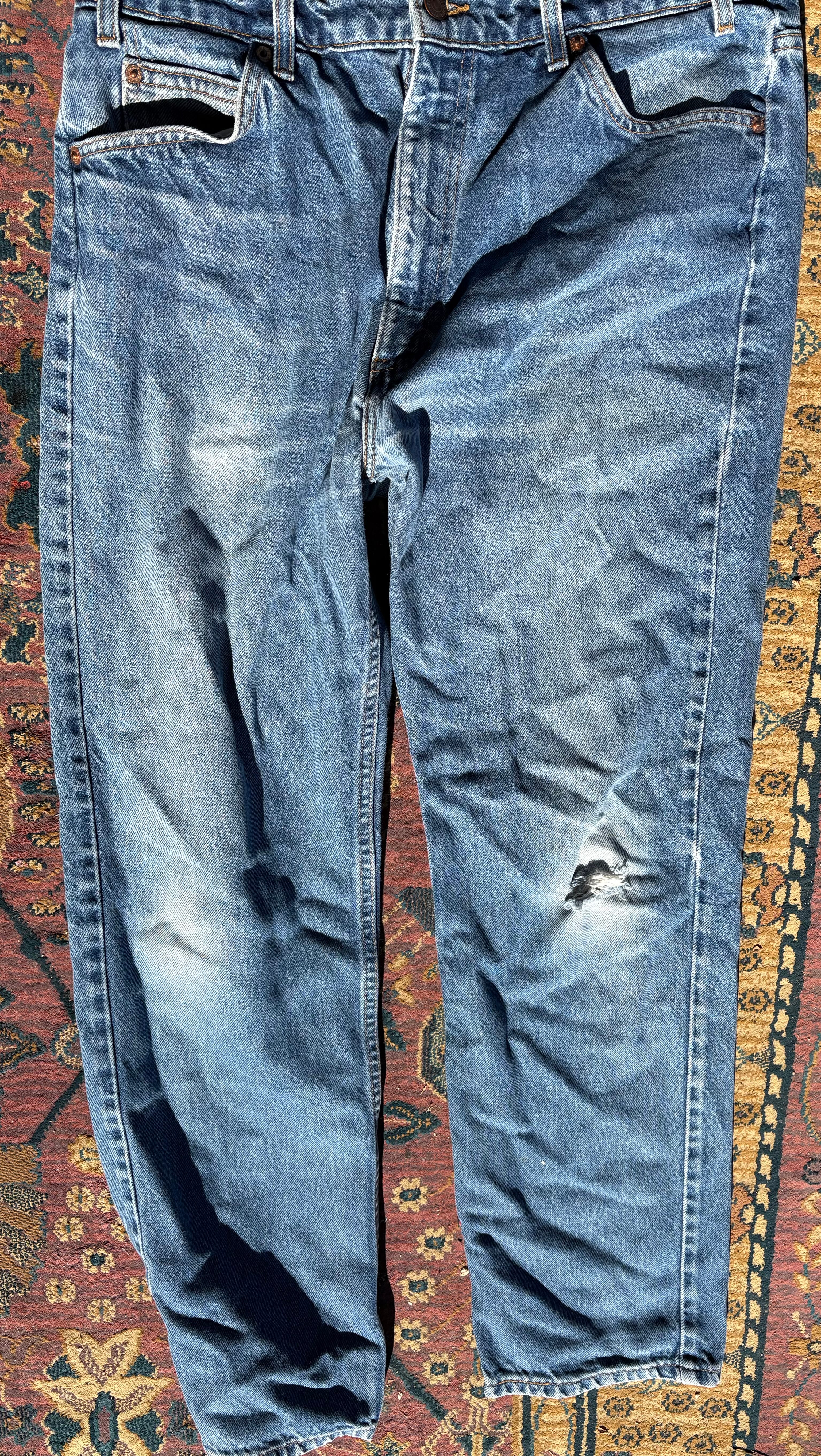
On the advice of L’Etiquette magazine, I decided in 2020 to test the idea that you really only need two pairs of jeans: One that has faded over time after many wears and another new pair only beginning its journey. A pair of selvedge raw denim jeans was ordered in addition to a cheaper pair of classic Levi’s 501s. The barbell approach to jeans, one being the most expensive jeans I’d ever bought with the other coming in well below $100. If nothing else, I’d learn something about how clothing materials age along the way.
Perhaps I was short of entertainment during that time, it being 2020 and all, but my first foray into raw denim was enlightening because the selvedge experience felt connected to a lot of other ideas I was circling at the time and to this day. Namely, that modern life has found myriad ways to disconnect us from enriching experiences both large and small. These can be significant or of the everyday variety, but taken together they amount to a complete shift in the way we actualize ourselves in the world.
I wrote to myself in an old journal at the time:
It feels good to put in the work for something that will be lasting. Even to feel the friction or uncomfortable sensation or pain. Like wearing raw denim. It’s uncomfortable for a time, but you know there is a payoff in future comfort and a lasting thing…I have become interested in the idea of time horizons…when you pay a larger up front cost for something like selvedge denim, the expectation is you are forgoing frequent consumption in the form of jeans due to the quality of the materials. It is made to last and improves with age. Looking at my jeans, I know they will improve with time and become even more suited to me. The process or journey then becomes enjoyable...
Reading this, you might feel I’ve strayed into pedantry. “They’re just jeans man.” Raw selvedge denim is uncomfortable. You can just buy pre-washed, soft, or broken-in jeans for a hell of a lot less money.

But here’s the thing: By severing the connection to deeper gratification over longer periods of time and offering us shortcuts in exchange for faster consumption and instant gratification, we become ignorant to the benefits of thinking and living across a longer time horizon. Not to mention the environmental impact of things wearing out faster and needing to be pre-washed many times. There seems to be very few ways where the shortcuts offered actually help us. Instead it’s produces a “comfort crisis” to borrow a term from the mental and physical health space, which is also characteristic of modern fashion and style.

Menswear is a rebellion; menswear is for romantics.
We’re all trying to recover something. A lost sense of decorum, a bit of dignity. A dash of swagger and individuality; a belief things should last longer than a season. The idea that getting dressed is a way to reflect the beauty and meaning in life. It’s about paying respect to yourself and others. Dressing yourself with care and intention is a way to manifest yourself and your values in the world, even you regard that as a small way.
Shortcuts never build character. In the world of denim, they’ve led to the death of an iconic American industry and manufacturing know-how, less interesting and individualized products, and further distance between the consumer and product understanding. Exploitation is almost always downstream from this severance.
I don’t want life to be necessarily efficient; I don’t want easy answers. Give me raw, American denim.
-Nate
Final Notes:
I owe a debt to Michael B. Dougherty, whose recent article on the American denim industry for Esquire magazine industry, spurred this essay.
Also to Vacations On, who continues to experiment with washing and wearing.